
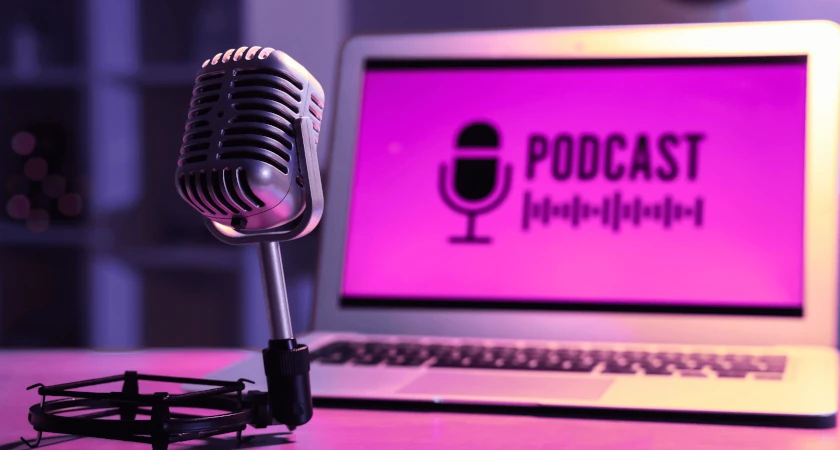
Podcasts have long been associated with audio. People listened to them on public transit, in the car, during workouts, at work, or before bed. But in recent years the format has evolved quickly. By 2026, the podcast is no longer just an audio file: it often becomes a full video show, filmed in a studio and published on YouTube, Spotify, Apple Podcasts, or other platforms.
This shift completely changes user habits. Some want to watch the full interview, see guests’ expressions, take in the set or enjoy a more immersive format. Others prefer to listen to the episode as audio only, especially when they’re on the move. As a result, more and more users are looking to download a video podcast, convert it to audio or save it for offline listening.
This trend is confirmed by the evolution of major platforms. Apple has announced a new experience dedicated to video podcasts, notably making it easier to switch between audio and video, with support for downloading video episodes for offline viewing. YouTube is also pushing podcasts into its ecosystem by allowing podcasts to be watched or listened to in YouTube Music, which shows that the line between video, audio and podcasts is becoming increasingly blurred.
Why video podcasts are exploding in 2026
The success of video podcasts rests on a simple idea: viewers like to see the people who are speaking. A filmed conversation creates a sense of closeness. You can see reactions, silences, gestures, smiles, hesitations and emotions. That makes the exchange more lively than a simple audio file.
YouTube has strongly contributed to this shift. Many creators now publish their podcasts directly as videos, because the platform offers significant visibility, a powerful search engine and effective recommendations. For a creator, publishing a podcast as video allows reaching podcast fans, YouTube subscribers and people who discover the content via short clips.
Spotify has also taken part in this shift by developing video podcasts. Apple, for its part, is doubling down so YouTube and Spotify don't dominate the market. According to Business Insider, Apple announced in February 2026 a new video experience for its Podcasts app, with video playback features, offline downloads, and new monetization tools for creators.
This competition between platforms makes the format even more visible. Creators are encouraged to film their shows. Platforms are improving their tools. Listeners become viewers. And viewers sometimes want to go back to being just listeners when they don't have the time or opportunity to watch the screen.
That's where downloading and conversion become useful.
Why download a video podcast?
Downloading a video podcast meets several concrete needs. The first is offline viewing. A two-hour show uses a lot of mobile data. If the user is on a train, plane, or in an area with a poor connection, they may prefer to download the episode in advance to watch it at their leisure.
The second need is preservation. Some podcasts disappear, switch platforms, become private, or are deleted after a controversy, an editorial update, or a creator's decision. Downloading an episode lets you keep a personal copy, especially when it's an important interview, a conference, a class, a debate, or a testimony.
The third requirement is flexibility. A video podcast can be watched at home on a computer, then listened to later as audio in the car. The user doesn’t necessarily want to depend on a single app or platform. They want to choose the format depending on the moment.
The fourth need concerns content creators, journalists, students, and professionals. A video podcast can contain useful information, quotes, content ideas, or analysis. Downloading the episode lets you rewatch it, take notes, create a summary, or extract specific segments for personal or professional use, always respecting copyright.
Finally, there’s convenience. Not everyone likes depending on a permanent Internet connection. Being able to access content offline remains a real advantage, especially for long shows.
Why convert a video podcast to audio?
Video podcasts are pleasant to watch, but they're not always practical. Many users simply want to listen to the discussion without keeping the screen on. This is especially true for long episodes: interviews, debates, business shows, tech discussions, cultural podcasts, coaching, personal development, or news.
Converting a video podcast to audio gives you more freedom. An audio file generally takes up less space than a video. It uses less battery. It can be listened to in the background. It's more convenient while driving, exercising, walking, doing housework or working.
It's also an interesting solution for people who want to build a personal library of content to listen to. Instead of accumulating heavy video files, they can keep only the audio versions of the episodes they really care about.
MP3 remains very popular for this use because it's compatible with almost every device: smartphones, computers, tablets, car stereos, audio players, smart speakers, and editing software. For some users, converting a video to MP3 is therefore the easiest way to turn a YouTube show or a video podcast into a true audio podcast.
Platforms that enhance video podcasting
Video podcasting is no longer just a secondary format. It is becoming a priority for several major platforms.
YouTube is naturally well placed, since filmed podcasts look like regular long-form videos. The platform also lets creators organize their content, add chapters, publish short clips and reach a global audience. YouTube said it launched podcast listening and viewing in YouTube Music in the United States without a mandatory paid subscription at that time, which already signaled its intent to make YouTube Music a podcast destination.
Apple, historically very strong in audio podcasting, now wants to better integrate video. The Verge reports that Apple Podcasts makes it easier to switch between audio and video versions, with support for downloading video podcasts for offline playback.
This shift shows that platforms no longer see the podcast as a simple audio file. They regard it as hybrid content that can be consumed in multiple ways. The same episode can become a long-form video, an audio file, a short excerpt, a vertical clip, a transcript, or a summary.
For users, that's great news. But it also raises a practical question: how do you get the right format at the right time?
Legal downloading: what you need to know
Downloading video podcasts must always respect copyright and the platforms' terms of use. A podcast generally belongs to its creator, studio, media outlet, or distribution platform. The fact that an episode is available online does not mean it can be copied, redistributed, or republished freely.
For personal use, offline downloading may be allowed directly by certain platforms, notably via their official apps. For example, YouTube Music and YouTube Premium offer offline download features depending on country, plan, and content. Recent guides note that offline downloading on YouTube Music generally requires a Premium or Music Premium subscription.
The rule is simple: downloading to listen or watch later in a private setting isn't the same as downloading to republish. You must not take a video podcast, put it back online, sell it, use it in advertising or extract long passages from it without permission.
You should also respect creators. Podcasts require time, equipment, editing, preparation and sometimes an entire team. If you like a podcast, subscribe to its channel, leave a comment, share the official link and support the creator when possible.
How to choose between video, audio, subtitles and transcription?
A video podcast can be used in several ways. The right format depends on your goal.
If you want to fully enjoy the episode, with the speakers’ expressions, the setting, the reactions and the visual elements, the video format is the best choice. It’s ideal for filmed interviews, podcasts with demonstrations, product discussions, visual analyses or studio shows.
If you only want to listen to the conversation, the audio format is more convenient. It lets you consume content on the go without looking at the screen. It’s the best choice for long conversational episodes.
If you want to find a specific piece of information, subtitles or the transcript are very useful. They make it possible to search for a word, copy a quote, take notes, or summarize the episode. This is especially valuable for students, journalists, content creators, and professionals.
If you want to quickly share a highlight, a short excerpt may be more appropriate. Creators often use long podcasts to produce short clips intended for TikTok, Instagram Reels, YouTube Shorts or LinkedIn.
A modern video podcast is therefore no longer a single file. It's a source for multiple possible formats.
The benefits of offline downloading
Offline downloading remains one of the most sought-after features, especially for long-form content. A video podcast can last an hour, two hours, or more. Streaming such content can consume a lot of data and depends heavily on connection quality.
By downloading the episode in advance, the user avoids interruptions, slowdowns and quality loss. They can watch or listen to their content on the subway, on a plane, at a hotel, while on a business trip or in an area with a weak network.
Offline downloads also help you manage your time better. You can prepare a playlist of episodes before a long trip, convert some episodes to audio, delete files after listening, and keep only the important content.
For people learning a language, it's also very useful. They can download a video podcast, listen to it multiple times, slow down certain passages, read the subtitles and take notes. The podcast then becomes a learning tool.
Video podcasts and storage: how to avoid filling up your device?
The main drawback of video podcasts is file size. A long high-quality video can take up a lot of space on a smartphone or computer. If you download multiple episodes without managing them, your storage can quickly fill up.
The first solution is to choose the right quality. It’s not always necessary to download a podcast in very high resolution. For a simple filmed discussion, medium quality may be sufficient, especially if the goal is to listen rather than watch.
The second solution is to convert into audio the episodes you don’t want to watch. An MP3 file is much lighter than a full video. This lets you keep more episodes without filling up storage.
The third solution is to organize your files. Create folders by theme: business, tech, sport, culture, learning, interviews, languages, inspiration. Rename files with the podcast name, the guest, and the date. You'll find your content more easily.
The fourth solution is to regularly delete what you’ve already listened to. Many users download episodes “just in case” and then never open them. Good storage management prevents accumulating unnecessary files.
Mistakes to avoid when downloading a video podcast
The first mistake is downloading from dubious sites. Some fake download tools can show excessive ads, push you to install unnecessary software, or redirect to risky pages. It’s better to use simple, clean services that don’t ask for sensitive information.
The second mistake is downloading files that are unnecessarily large. For a talk podcast, very high resolution isn't always necessary. Choosing an appropriate quality saves storage and time.
The third mistake is neglecting copyright. Downloading an episode for private use is one thing. Republishing it on another platform or extracting commercial content from it without permission is another.
The fourth mistake is not checking the format. Some devices play MP4 very well but handle other formats less reliably. For audio, MP3 often remains the most compatible choice. For video, MP4 is generally the most practical.
The fifth mistake is not organizing your files. After a few weeks it becomes hard to find an episode if file names are vague or autogenerated.
The future of video podcasting
Video podcasting should continue to progress in the coming years. Creators understand that a filmed episode can be reused in many ways. A two-hour discussion can yield a long video, ten short clips, an article, a newsletter, a transcript, and several social posts.
Platforms, for their part, want to keep users in their apps longer. That's why they're improving playback, download, monetization and discovery features. The podcast is becoming a strategic format, halfway between radio, television, YouTube and social networks.
Artificial intelligence will also reinforce this trend. It makes generating subtitles, translation, summarization, automatic clipping into segments, audio enhancement, and metadata creation easier. Video podcasting therefore becomes easier to produce, easier to distribute, and easier to repurpose.
For users, the challenge will be to keep control: choosing what they want to watch, listen to, download, convert or archive.
Conclusion
Video podcasts are one of the major digital trends of 2026. They combine the depth of audio podcasts with the visual impact of video, allowing interviews, debates, training sessions, specialized shows, and long discussions to be followed in a more immersive way.
But this abundance also creates a new need: being able to choose the format. Sometimes you want to watch the full episode. Sometimes you just want to listen. Sometimes you want to download it for a trip. Sometimes you want to convert the video to audio to save battery and storage.
Tomorrow’s podcast won’t be just audio or video. It will be flexible. The user will want to switch from one format to another depending on their need, device, connection and time of day. Downloading, converting, listening offline and organizing content will therefore become essential habits in modern podcast consumption.