
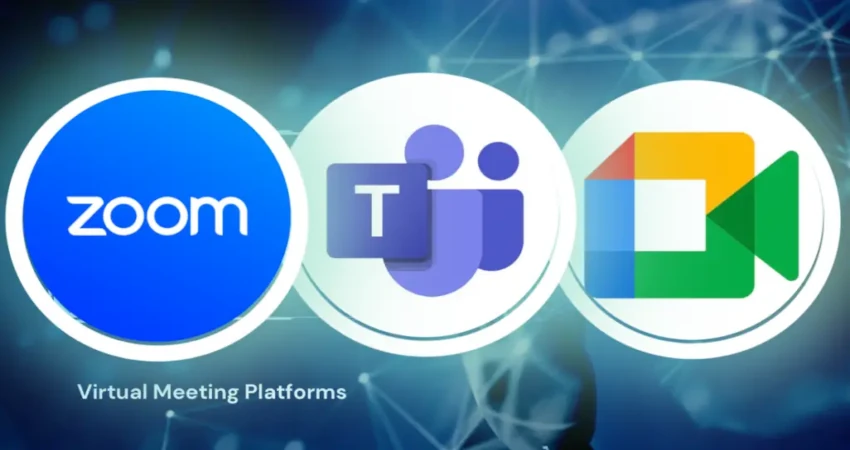
Online meetings have become an essential part of modern work. Between Zoom, Google Meet, Microsoft Teams, webinars, remote training, client interviews, online courses and team meetings, much professional communication now takes place via videoconference. But in 2026, a new trend is emerging: meetings are no longer just recorded. They are also Transcribed, Summaries, analyzed and sometimes turned into action lists thanks to artificial intelligence.
This shift is changing the way we work. Previously, recording a meeting mainly served as a video record. You then had to rewatch the recording, scrub the timeline, take notes manually and find the important parts. Today, AI tools can generate a summary, extract decisions, list tasks, find key moments and produce a usable transcript. Microsoft Teams, for example, offers recaps that let you review recordings, transcripts and shared content from a single place. Zoom AI Companion also lets you enable a meeting summary and, depending on the options chosen, retain a transcription after the meeting.
Users no longer want to just watch a meeting on a platform. They want to be able to download the recording, convert the video to MP4, extract audio to MP3, retrieve the transcript, Keep AI summary and archive files to find them later. The need is clear: turn a meeting into reusable content.
Why AI meetings are becoming a real trend
The first reason is meeting overload. Many professionals spend several hours a week in video conferences. Some meetings are useful, others too long, and it becomes hard to remember everything. After a day full of calls, it's common to forget a decision, a date, a technical detail, or an action to take.
The second reason is hybrid work. Teams are sometimes spread across multiple cities, countries, or time zones. Not everyone can attend every meeting. A recording with an AI summary lets people who missed it quickly catch up on the essentials without watching an hour-long video.
The third reason is productivity. A transcription lets you search for a keyword in the meeting. Instead of rewatching the entire video, you just need to find the moment when a client mentioned a price, a deadline, a feature, or a problem. Teams, Zoom, and Google Meet are evolving toward experiences where notes, transcripts, and summaries become as important as the video itself.
The fourth reason is the arrival of integrated AI assistants. Microsoft says Copilot in Teams can use a meeting's transcript as a source to help users find content and catch up on discussions. Google has also strengthened features related to notes, transcripts, and recordings in Meet, with new explicit consent rules for certain uses.
The fifth reason is archiving. Companies, trainers, freelancers and students want to keep important meetings in multiple formats. A video can be useful to review the context, audio can be used to listen on the go, the transcript can be skimmed quickly, and the summary provides a short record.
Downloading a meeting: what's it really for?
Downloading a meeting first lets you keep a copy independent of the platform. A recording stored only in Zoom, Google Drive, OneDrive or Teams can be deleted, moved, restricted by company policy or become inaccessible if an account changes. By downloading the meeting, the user keeps a backup copy.
The second advantage is offline viewing. A trainer can download their recorded course to review on the train. A salesperson can retrieve a client meeting to prepare a report. A student can save an important video conference to study without a connection. A project manager can archive a sign-off meeting before a delivery.
The third advantage is conversion. A video meeting can be large. If the goal is only to listen, it's often more convenient to extract the audio as MP3. This lets you listen to the meeting like a podcast — in the car, while walking, or during a break.
The fourth benefit is repurposing. A recorded training can be split into modules. A webinar can become a YouTube video. An internal meeting can be turned into a tutorial. A conversation with an expert can serve as the basis for an article, an FAQ or documentation.
The fifth advantage is evidence. In some contexts, a recording allows you to keep a record of a decision, an agreement, or a technical explanation. However, be careful: recordings must always comply with consent and privacy rules.
Zoom, Google Meet and Teams: the platforms are changing
Major videoconferencing platforms now integrate AI directly into their products. Zoom AI Companion notably offers meeting summary features, with the option to ask the host to enable certain functions and, depending on settings, to generate a transcript after the meeting. This shows that Zoom is no longer just about video: the platform also wants to help understand what was said.
Microsoft Teams places strong emphasis on Recap. The Recap feature lets you find recordings, transcriptions, files and shared content without switching apps. Microsoft is also working on audio recaps for some transcribed or recorded meetings, with storage in OneDrive for a duration defined in the administrator documentation.
Google Meet is moving forward on its side with Gemini. Google announced that explicit consent will be required for certain features like “Take Notes with Gemini,” recordings, and transcriptions in Meet, which shows that platforms are taking privacy seriously. The Verge also reports that Google has expanded Gemini’s AI note-taking capabilities to more contexts, including some uses related to in-person meetings.
This development confirms a clear trend: the future of the meeting is not limited to the video call. It includes recording, transcription, summarization, task management, and searching within conversations.
Download a meeting in MP4: the most convenient format
MP4 remains the most convenient format for downloading a video meeting. It is compatible with most devices: Windows, Mac, Android, iPhone, iPad, connected TVs, video players, and editing software. To share a meeting, embed it in an LMS, publish it on a private platform, or keep it in a folder, MP4 is generally the best choice.
An MP4-recorded meeting can include participants' video, screen sharing, slides, the presenter's webcam, and sometimes audio from all speakers. It's the ideal format when you need to keep the visual context: software demos, PowerPoint presentations, training, shared whiteboards, document analysis, or technical meetings.
However, MP4s can be large. A two-hour meeting with screen sharing can take up a lot of space, especially if exported in high quality. To avoid filling up your computer or cloud, it’s advisable to create multiple versions: a high-quality original for the archive, a compressed version for sharing, and possibly an audio version for quick viewing.
Converting a meeting to MP3: ideal for listening offline
Not all meetings need to be rewatched as video. In many cases, audio is sufficient. A team meeting, an interview, a brainstorming session, coaching, or a project update can be listened to like a podcast. That's where converting to MP3 becomes very useful.
MP3 takes up far less space than a video file. It uses less battery on mobile and plays easily in almost any audio app. A user can listen on the go without keeping the screen on.
For content creators, audio extraction also makes it possible to reuse a meeting as a private podcast, a voice note, training material or a basis for a transcript. For students, it allows re-listening to a recorded lecture while commuting. For professionals, it allows reviewing a client exchange without opening the video.
Meeting transcription: why it's often more useful than the video
A video is rich, but it's hard to skim quickly. A transcription, by contrast, can be read, searched, copied, summarized and archived. That's why transcriptions are becoming central in AI meetings.
With a transcript, you can search for a keyword, find a decision, copy a quote, check an instruction, or prepare a report. For long meetings, it’s a huge time saver. Instead of rewatching an entire video, you can go straight to the passage that matters.
Transcripts also support accessibility. They help deaf or hard-of-hearing people, non-native participants, multilingual teams, or people who prefer reading to listening. They also facilitate automatic translation and subtitle creation.
AI tools go further: they don't just transcribe. They can identify decisions, actions, open questions, and main themes. Specialized tools now present AI meeting assistants as systems capable of transcribing, summarizing, and extracting action items from calls.
AI Summary: turn a meeting into an action plan
The AI summary is probably users' favorite feature. After a meeting, people want to know quickly: what was decided? Who has to do what? What are the next steps? Which items are still blocked?
A good AI summary should be clear, structured, and useful. It can include the topics discussed, decisions made, tasks assigned, important dates, outstanding questions, and any links or files mentioned. For a business meeting, it can also summarize the client's needs. For a training session, it can list the key points. For an interview, it can retain the important information.
Be careful though: an AI summary must be verified. Artificial intelligence can misinterpret a passage, confuse two speakers, miss a nuance, or rewrite a decision too strongly. For important meetings, always proofread the summary and compare it with the transcript or the recording.
The right move is to use the summary as a starting point, not as absolute truth. It saves time, but human validation is still necessary.
Privacy and consent: never to be overlooked.
Recording, transcribing or summarizing a meeting involves sensitive data. A meeting can contain personal information, customer data, financial figures, business strategies, HR issues, internal documents or confidential information.
It is therefore essential to inform participants. In many contexts, people must know that the meeting is being recorded or transcribed. Google has also highlighted explicit consent rules for certain note-taking, recording and transcription features in Meet.
Privacy also depends on where you store it. A recording can be stored on the platform's cloud, in Google Drive, in OneDrive, on a company server, or on a local computer. Each option has its advantages and risks. You should check who can access the file, how long it is retained, and whether it can be shared.
For businesses, it's advisable to define a clear policy: when to record, who can download, where to store, how long to retain, how to protect files and when to delete recordings.
For individuals and freelancers, the simple rule is: never record or share a sensitive meeting without the clear consent of those involved.
How to organize your downloaded meetings
Downloading a meeting is useful, but you still need to be able to find it later. Many users accumulate automatically named files, such as meeting-recording-01.mp4, then no longer know what they contain.
The first recommended practice is to give files clear names. For example:
2026-05-24-reunion-client-site-web.mp4
2026-05-24-reunion-client-site-web-transcription.txt
2026-05-24-reunion-client-site-web-resume.pdf
This system lets you quickly find the date, the subject and the file type.
The second best practice is to create folders by client, project, course or team. A meeting folder can contain the video, the audio, the transcription, the summary, shared files and the final notes.
The third best practice is to delete what’s no longer needed. Not all meetings should be kept indefinitely. Keeping too many recordings increases the risk of leaks and clogs storage.
The fourth best practice is to back up important meetings. A critical recording can be copied to an external drive or a secure cloud. For confidential files, encryption is recommended.
AI meetings and content creation: a huge opportunity
Recorded meetings can become a source of content. A webinar can be turned into a blog post. A training session can become a series of short videos. An interview can become a podcast. A product meeting can generate an FAQ. A customer exchange can produce documentation or a brief.
This is where downloading, transcribing and summarizing come together. The video preserves context, the audio enables listening, the transcription provides the raw text, and the summary offers an editorial starting point.
This trend doesn't only concern large companies. Coaches, teachers, consultants, web agencies, trainers, freelancers and independent creators are all increasingly using recorded meetings as raw material.
Mistakes to avoid
The first mistake is downloading a meeting without checking access rights. If the recording doesn't belong to you or contains confidential information, you must ask for permission before saving or sharing it.
The second mistake is publishing a raw meeting. An internal meeting can contain names, private information, hesitations, client data, or passages not intended for the public. Before publishing, you should cut, anonymize, and verify.
The third mistake is to trust the AI summary blindly. You should review important decisions, especially if the meeting concerns a contract, a project, an invoice, a delivery, or liability.
The fourth mistake is keeping files in a public or poorly protected folder. A misconfigured sharing link can expose a meeting to unauthorized users.
The fifth mistake is keeping only the video. For important meetings, it's often more useful to also keep the transcript and the summary.
Conclusion
AI meetings represent a new step in how we work. In 2026, a meeting is no longer just a live moment. It becomes usable content: video, audio, transcript, summary, tasks, decisions, and archives.
Zoom, Google Meet and Microsoft Teams are increasingly integrating AI to make note-taking, summaries and searching conversations easier. Users, however, want to keep control of their files: download the recording, convert to MP4 or MP3, retrieve the transcript, share the summary and archive important information.
This trend is very useful, but it must be used with caution. Consent, privacy, secure storage and human review remain essential. A meeting may contain sensitive information, and AI can sometimes be wrong.
In short, the big question is no longer just: "How do I record a meeting?" It becomes: "How do I turn a meeting into a useful, viewable, shareable and easy-to-find file?" That's exactly where download, conversion and transcription tools prove their value.