

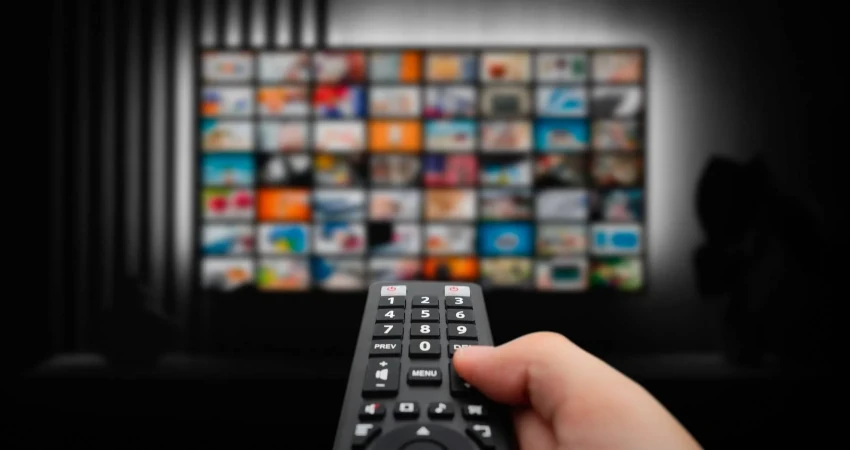
Television is changing rapidly. For a long time, viewers had three main options: watch traditional channels, pay for a cable or satellite subscription, or subscribe to a streaming service like Netflix, Prime Video, Disney+ or Max. But in recent years, another model has been gaining ground: FAST TV, that is, free ad-supported streaming television.
The term FAST stands for “Free Ad-Supported Streaming Television.” In French, you might call them free, ad-supported streaming channels. The principle is simple: the user accesses channels or programs without a paid subscription but agrees to see ads before, during, or between content. This model resembles traditional television, but it's delivered over the Internet and integrates with smart TVs, mobile apps, TV boxes, web browsers, and connected devices.
In 2026, FAST TV is becoming one of the major video trends. Platforms like Pluto TV, Samsung TV Plus, Rakuten TV, The Roku Channel, LG Channels, Plex, Tubi and other services offer free themed channels: movies, series, documentaries, sports, news, cooking, music, lifestyle, youth, true crime, gaming, cars, or cult shows. The market is growing strongly, fueled by rising paid subscriptions, platform fatigue, and a desire to return to a simple, free, and accessible TV experience.
Here's a comprehensive guide to understand this trend and to properly manage videos sourced from free streaming TV.
What is FAST TV?
FAST TV refers to television channels broadcast for free on the Internet and funded by advertising. Unlike subscription platforms, the user does not necessarily pay a monthly fee. They watch content for free, like on a traditional TV channel, but the service displays ads.
FAST TV can take two main forms. The first is linear live broadcasting. A channel airs programming according to a schedule, like a traditional channel. You might arrive in the middle of a film or show, then continue watching what follows. The second form is free video on demand, sometimes called AVOD. In that case, you choose a program from a catalog and watch it with ads.
The two models often blend. A FAST app can offer live channels, replays, movies on demand, series episodes, short clips, or themed channels available 24 hours a day.
The benefit is clear: no need to pay for multiple subscriptions to access content. The user simply accepts a model similar to traditional TV, but with the flexibility of streaming.
Why FAST TV is booming in 2026
The primary reason is subscription fatigue. Many households already pay for several services: Netflix, Disney+, Prime Video, Spotify, video games, cloud services, software, sports, online storage, or digital news. Over time, the monthly bill adds up. Free ad-supported channels offer a more accessible alternative.
The second reason is simplicity. On a traditional platform you often have to choose what to watch. Sometimes you spend more time browsing the catalog than actually starting a program. FAST TV returns to a more passive logic: you open a channel, the program starts, and you watch without thinking too much.
The third reason is the proliferation of smart TVs. Many connected televisions include free channels directly. Samsung TV Plus, LG Channels or other services sometimes appear in the TV interface without complicated installation. That greatly simplifies adoption.
The fourth reason is video advertising. Advertisers are looking to reach viewers who are leaving traditional television. FAST channels allow ads to be shown in a TV-like video environment, but with the advantages of digital.
The fifth reason is the exploitation of catalogs. Studios and media companies own many films, series, documentaries and older shows. FAST channels allow them to give new value to this content without placing it behind a subscription.
FAST TV, classic streaming and IPTV: what are the differences?
FAST TV should not be confused with other types of streaming. A platform like Netflix relies mainly on paid subscriptions and an on-demand catalog. A FAST channel typically relies on free, ad-supported programming.
IPTV, for its part, technically refers to television over Internet Protocol. It can be legal or illegal depending on the service. Operators' official offerings are legal. However, some pirate offers sell access to pay channels without authorization. Legal FAST TV has nothing to do with these dubious services: it offers free channels with the rights holders' consent.
Traditional television is delivered via TNT, cable, satellite or operator set-top boxes. FAST TV goes over the Internet and can be available on smart TV, mobile apps, browsers or streaming devices.
The common point with traditional TV is the linear experience: you choose a channel and watch what's being broadcast. The difference is that everything is distributed via streaming, often with targeted ads and a larger number of themed catalogs.
Why users want to download or save FAST programs
FAST TV is convenient, but it has a limitation: programs are not always available when you want them. A linear channel broadcasts according to a schedule. If you miss a documentary, an interview or an episode, it isn't always easy to find it again.
That's why many users look to download or save certain content when it's legally available as a replay, an official clip, or in an on-demand library. The need is simple: watch later, view offline, keep an educational program, create a personal archive, or avoid connection interruptions.
Downloading may also be of interest to content creators, journalists, students, or professionals who want to analyze broadcasts, keep references, or extract information from legally available programs. However, note: saving something for personal use is not the same as publicly republishing protected content.
MP4: the most convenient format for FAST TV
MP4 remains the most practical video format for saving or converting a video from a replay or an extract that is legally available. It is compatible with most devices: Windows, macOS, Android, iPhone, iPad, smart TVs, TV boxes, consoles, and media players.
MP4 can contain video, audio and sometimes subtitles. With a codec like H.264 it offers very broad compatibility. With HEVC, also called H.265, it can reduce file size while retaining good quality, but it's not always playable on older devices. AV1 is becoming increasingly interesting for compression, but its compatibility still depends on hardware.
For simple use, the best choice is often MP4 in H.264 with AAC audio. It is the format the safest option if you want to watch your videos on different devices without problems.
For long-form content, like films or documentaries, file size becomes important. A well-tuned conversion lets you retain good quality without creating a huge file.
Downloading a FAST replay: what to check
Before downloading a program, first check that it is legally available. Some platforms offer a replay option, an on-demand library, or official clips. Others only allow live streaming. Terms of use can vary by service, country, and content.
You should then check the format. Some content may be protected by DRM, that is, digital rights management systems. In that case, downloading or converting may be restricted or prohibited. It's important to follow the platform's rules.
If a replay is offered officially, check whether an offline option exists in the app. Some platforms allow you to download videos temporarily to watch them offline, but only within their own app. In that case, the file is not necessarily exportable.
If the content is freely available, not protected and allowed to be downloaded, converting to MP4 can be useful for more universal playback.
The right approach is simple: use official options when they exist, respect copyright, and avoid shady tools that promise to bypass all protections.
Offline viewing: one of the biggest needs
Offline viewing is highly sought after. Even though FAST TV is designed for streaming, users sometimes want to watch a program on a train, on a plane, in an area with poor connectivity or without using mobile data.
Long programs can be hard to watch via streaming if the Wi-Fi is unstable. A documentary can cut out, a show can reload, a movie can lose quality. Offline mode avoids these problems.
For travelers, it's very convenient. Download in advance An authorized broadcast, documentary, or replay allows you to enjoy the content later without relying on the network.
You should plan for storage. A long, high-quality video can take up a lot of space on a smartphone. It can be useful to create a lighter mobile version, in 720p or 1080p depending on the screen.
Compression: reduce the size of long broadcasts
FAST channels often broadcast long-form content: movies, series, shows, documentaries, concerts, interviews, or lifestyle programs. If you save multiple videos, disk space can quickly fill up.
Video compression reduces file size, but it needs to be well balanced. Too much compression makes the image blurry, creates visible blocking, and degrades the sound. Too little compression produces huge files that are hard to store or transfer.
For a film or show intended for a smartphone, 720p resolution may be sufficient. For a television, 1080p is often preferable. 4K is only useful if the source content is truly in 4K and you have a suitable screen.
The choice of codec is important. H.264 is compatible everywhere. HEVC reduces file size more but can cause issues on older devices. AV1 is efficient but even less universally supported.
It's advisable to keep a clean source version if the content is important, then create a compressed copy for mobile.
Subtitles and accessibility: an essential point
Subtitles are very important in FAST TV. Some content is foreign, some programs are watched without sound, and some users need subtitles for accessibility.
The most common formats are SRT and VTT. SRT is widely used for traditional video players. VTT is common on the web. Some subtitles are separate, others are burned directly into the image.
When you save a video, check whether subtitles are available. If you convert a file, make sure you don't lose them. For universal playback, burned-in subtitles are convenient but cannot be turned off. Separate subtitle files are more flexible: you can change the language, correct the text or enable them as needed.
For educational content, documentaries, or interviews, keeping subtitles can be very useful. They also make it easier to find specific information, especially if you use a transcription.
Extract audio from a FAST program
In some cases, the image isn't essential. An interview, a debate, a spoken documentary, an analysis show, or a news program can be listened to like a podcast. Extracting the audio as MP3 or M4A can then be very practical.
Audio takes up far less space than video. It can be listened to in the car, while walking, on public transport or at work. For long programs, it's a real convenience.
You should choose an appropriate audio quality. For voice, an MP3 at 128 or 160 kbps may be sufficient. For music, a higher bitrate is preferable. If the program includes a concert or performance, it's best to keep a higher bitrate.
Audio extraction must, of course, respect the content's rights. It's mainly useful for personal use when you have legal access to the program.
Themed channels: the big advantage of FAST TV
FAST TV is very strong on thematic channels. Rather than a generalist channel, you find channels dedicated to a specific genre: action films, comedies, police dramas, historical documentaries, cooking, true crime, nature, sports, music videos, international news, automotive shows, or children’s programming.
This specialization makes the experience enjoyable. You can open a channel that matches your mood without searching for a specific title. It’s a bit like listening to the radio, but in video form.
For users, it also means more content to discover. A FAST channel can bring forgotten programs, classics, niche shows, or older catalogs back into the spotlight.
For personal organization, it can be useful to keep a list of favorite channels, note program times, and check whether some content is available on replay.
FAST TV and sports: rapidly growing usage
Sports is an important area for free streaming channels. Not all major premium competitions are necessarily available for free, but many FAST channels offer highlights, magazine shows, sports documentaries, secondary sports, archives, interviews or less publicized events.
For fans, it's a way to access sports content without a subscription. For platforms, it's a way to attract a loyal audience. Sports programs have an advantage: they're easy to watch live and build viewing habits.
Sports clips, interviews and highlights can also be saved when they are legally available. MP4 is ideal for keeping a clip, an analysis or a standout moment.
Be careful about sports rights. Sports footage is often tightly protected. Avoid republishing clips without permission.
FAST TV and smart TV: the simplest experience
Most users discover FAST TV directly on their connected TV. Some brands integrate free channels into the interface. Sometimes you just need to open a preinstalled app to access dozens or hundreds of channels.
This integration is very effective. The user does not need to install an additional set-top box. They get an experience similar to traditional television: program guide, channels, channel surfing, categories, favorites.
But a smart TV isn’t always ideal for saving or organizing content. Download features are often limited. That’s why some users use a computer, a mobile app, or a browser to manage their videos, when the service’s rules allow it.
The smart TV is perfect for watching. A computer is often better for converting, sorting, archiving, and managing files.
Copyright: essential rules you must follow
FAST TV is free for the user, but that doesn't mean the content is copyright-free. Films, series, shows, documentaries and clips belong to rights holders. Advertising funds access, but does not grant permission to republish.
So you need to distinguish between different uses. Watching a free channel is permitted. Using an official replay or offline download option is permitted under the specified conditions. Saving content that is freely downloadable for personal use may be acceptable depending on the applicable legal framework.
On the other hand, reposting a film, a show or a compilation on YouTube, TikTok, Facebook or a personal website without permission can infringe copyright. Altering protected content to monetize it is also risky.
Advertising and user experience
Advertising is at the heart of the FAST model. Without ads, the service couldn't be free. Ads help finance rights, hosting, distribution and the platform.
However, not all ad experiences are equal. Some platforms insert ads reasonably, with breaks similar to traditional TV. Others can be more aggressive, repetitive, or poorly targeted.
For the user, the advantage remains free access. But you have to accept that advertising is part of the experience. That's the main trade-off of the FAST model.
Some users will prefer to pay a subscription to avoid ads. Others will accept ads to reduce their expenses. It’s precisely this choice that makes the market interesting: not everyone has the same priorities.
The future of FAST TV
FAST TV should continue to grow. Platforms want to attract users who don’t want to pay for too many subscriptions. TV manufacturers want to enrich their interfaces. Advertisers want to reach connected audiences. Studios want to monetize their catalogs.
Expect more themed channels, more recent content, better personalization, more targeted ads, smarter program guides, and more bridges between live, replay, and video‑on‑demand.
The model could also mix with paid platforms. Some services will offer free, ad-supported versions and premium ad-free options. This hybridization is already visible in modern streaming.
For users, it means more choice. But it also means more content to manage, more platforms to compare, and more attention to be paid to formats, rights, and video quality.
Conclusion
FAST TV is one of the major streaming trends in 2026. It revives the free TV experience, but with the flexibility of the Internet. Thematic channels, on-demand content, ads, smart TVs, mobile apps and replays create a new way to watch video without a mandatory subscription.
For users the benefit is clear: access more content without multiplying monthly payments. For platforms, it’s a way to monetize the audience through advertising. For rights holders, it’s a new life for catalogs of films, series, documentaries and shows.
But this freedom requires some best practices. You must respect copyright, use official options, choose compatible formats, keep subtitles, organize your files, and avoid dubious sites. MP4 remains the simplest format for compatibility, while compression helps manage long content.